Mobile Billboard Advertising vs Static Billboards: Which Is Better?
For Australian businesses, choosing the right outdoor advertising format can make a major difference to campaign visibility. Static billboards have been a familiar part of the advertising landscape for years, while mobile billboard advertising offers a more flexible way to take a brand message directly to different audiences and locations.
Both formats can build awareness, promote products and support local campaigns. However, they work differently. A static billboard stays in one location, while a mobile billboard can move through selected areas and reach people across multiple locations. Running Boards describes mobile outdoor advertising as a way to reach audiences in areas with high foot and vehicle traffic, with mobile formats available across major Australian markets.
So, which option is better for your business? The answer depends on your campaign goals, audience, location and the type of visibility you want.
What Is Static Billboard Advertising?
Static billboards are large advertising displays positioned at a fixed location. They can be found beside major roads, near shopping areas, transport routes and other busy locations.
The main advantage is consistency. Once installed, the billboard remains visible to people who regularly travel through that area. This can be useful for businesses targeting a specific local audience or wanting to maintain a long-term presence.
For example, a business opening a new store may choose a billboard close to the store to build familiarity among nearby customers.
However, the fixed nature of static advertising can also limit your campaign. Once the billboard is selected, your message is tied to that location for the duration of the campaign.
What Is Mobile Billboard Advertising?
Mobile billboard advertising uses large advertising displays mounted on vehicles or mobile platforms. Instead of keeping the advertisement in one place, the billboard travels through selected areas to reach audiences where they are.
Traditional mobile billboards can provide advertising visibility from multiple sides. Running Boards' mobile billboard format, for example, features large-format advertising across three sides, with options such as backlighting, audio, GPS tracking and reporting.
This mobility gives businesses more control over where their advertising appears.
A campaign can be planned around:
Busy CBD areas
Shopping precincts
Major roads
Event locations
Sporting venues
Entertainment districts
Business areas
Local communities
High-traffic periods
Instead of asking customers to come to your billboard, the billboard can move towards your customers.
Mobile vs Static Billboards: The Key Differences
1. Location Flexibility
This is one of the biggest differences.
A static billboard remains in one location. This can be effective when your target audience is concentrated in a particular area, but it limits your geographic reach.
Mobile billboard advertising provides greater flexibility. The campaign can move between locations based on where your audience is most likely to be.
For Australian businesses operating across multiple suburbs or locations, this can provide a useful advantage.
2. Audience Targeting
Static billboards rely heavily on the audience travelling past their location.
Mobile billboards can be planned around specific audiences and high-traffic areas. A campaign can move between locations during the day, helping businesses reach different groups.
For example, a business promoting a new product could target a CBD during the morning, shopping areas during the afternoon and an entertainment precinct later in the day.
This ability to move the campaign can make mobile outdoor advertising particularly useful for short-term promotions and location-based campaigns.
3. Visibility and Impact
Both formats can deliver large-scale visual advertising, but mobile billboards can create an additional sense of movement and presence.
A large mobile billboard travelling through a busy area can attract attention from pedestrians, drivers and nearby businesses. Running Boards states that its mobile billboard format can provide visibility from up to 70 metres and offers up to three sides of advertising space.
For brands launching something new, promoting an event or creating a strong local presence, this can help the campaign stand out.
4. Campaign Flexibility
Static billboards generally require physical creative production and installation when the advertisement changes.
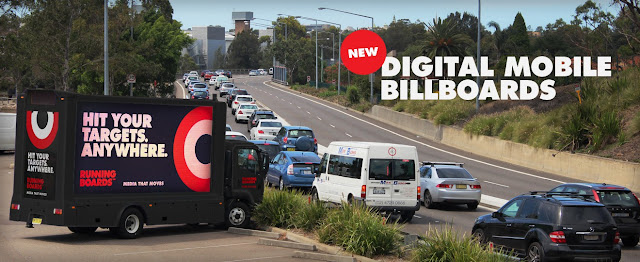
Mobile billboard campaigns can also use printed creative, but digital mobile billboards take flexibility further. Digital formats allow advertisers to change content and present different messages throughout a campaign.
Running Boards' digital mobile billboard format provides real-time remote access and internet connectivity, along with GPS tracking and reporting.
This can be useful when your campaign needs different messages for different times, locations or audiences.
5. Event and Promotional Campaigns
Static billboards can work well around permanent high-traffic locations, but mobile advertising can be particularly useful for temporary events.
Imagine promoting:
A product launch
A concert
A sporting event
A retail opening
A festival
A seasonal promotion
A brand activation
A mobile billboard truck can travel around the areas where your potential customers are gathering before or during the event.
This approach can complement other advertising channels and help bring the brand message closer to the audience.

When Should You Choose a Static Billboard?
Static billboards may be the better choice when your main objective is long-term visibility in one specific location.
They can work well for businesses such as:
Local retailers
Property developers
Shopping centres
Service businesses
Restaurants
Automotive businesses
Local franchises
If your customers regularly travel through one particular area, maintaining a consistent presence there can be valuable.
For example, a retailer may want to advertise near its store so potential customers repeatedly see the brand as they travel through the area.
When Is Mobile Billboard Advertising Better?
Mobile billboard advertising can be a stronger option when your campaign requires movement, flexibility and location targeting.
It can be particularly effective when you want to:
Reach several suburbs
Target busy locations
Promote a short-term offer
Support an event
Launch a new product
Build local awareness
Reach audiences at different times
Take advertising directly to high-footfall areas
Running Boards also provides digital mobile billboard solutions and other mobile outdoor advertising formats across Australian markets including Brisbane, Gold Coast, Townsville, Sydney, Canberra, Melbourne, Hobart, Adelaide and Perth.
What About Digital Mobile Billboards?
For businesses looking for more creative flexibility, digital mobile billboards can provide another option.
Instead of relying on one printed advertisement, digital screens can display changing content. This makes it possible to use multiple messages during a campaign.
For example, a business could promote:
Morning: “New product now available”
Afternoon: “Visit us today”
Evening: “Tonight only – don't miss out”
Digital mobile billboards can also support video and other digital content, depending on campaign requirements and local considerations.
This makes them useful for brands that want their outdoor advertising to feel more dynamic.
Can Businesses Combine Both Formats?
Yes. Businesses do not necessarily have to choose between mobile and static advertising.
A combination can create broader exposure.
A static billboard can provide a consistent presence in a high-value location, while mobile billboard advertising can take the same campaign message into surrounding areas.
Running Boards has highlighted campaigns where mobile and static activity are combined to increase impact and exposure.
This approach can be particularly useful for larger campaigns where the objective is to dominate a particular market or support a major event.
Which Billboard Format Is Right for Your Business?
There is no single answer for every Australian business.
Choose a static billboard when:
You want long-term visibility
One location is especially important
Your audience regularly passes the same area
You want a consistent local presence
Choose mobile billboard advertising when:
You want to reach multiple locations
Your campaign is location-specific
You are promoting an event or short-term offer
You want your advertising to move with your audience
You need greater flexibility
Choose digital mobile billboards when:
You want multiple creative messages
You want digital content
Your campaign needs frequent creative changes
You want additional flexibility and campaign reporting
Final Thoughts
Static billboards remain a strong option for businesses that want consistent visibility in a strategic location. However, mobile billboard advertising offers something static advertising cannot: mobility.
For Australian businesses looking to take their message into different suburbs, event areas, CBDs and high-traffic locations, mobile advertising can provide greater flexibility and reach. Digital mobile billboards take this further by combining movement with dynamic digital content and campaign technology.
Ultimately, the best choice depends on your campaign objective. If you want your message to stay in one place, static advertising may be suitable. If you want to move your message to where your audience is, mobile billboard advertising can be the more flexible solution.
Running Boards can help Australian businesses plan mobile billboard and digital outdoor advertising campaigns designed around their target locations and audiences.

Comments
Post a Comment